The Android-Chrome merger saga

The Android-Chrome merger saga

Articles with the following titles would be considered a joke “BMW is planning to merge its series i5 cars and Motorrad bikes” “P&G is planning to merge tissue paper and toilet paper” “Arm and Hammer is working on merging face wash, body soap, shampoo, laundry detergent, and dish cleaner” Not that these combinations can’t be made or have never been made but consumers would just not buy them. They are usually inferior or more convoluted, or even worse, both. ...


Remote - office not required

Book summary: Remote - office not required

The authors are founders of 37Signals. The book talks about how to go about remote work, its advantages and pitfalls. Here are some key takeaways from the book.

Standardization

Standardization

Standards exist so that products from different vendors can interoperate with each other, for example, sending email from Gmail to Yahoo! mail, and use common interfaces, for example, sockets for electrical appliances. The standardization does not always have to come from imposed standards; sometimes, it comes from the user expectations. For example, the interface of a Calander/Scheduling application is pretty standardized. There is little scope to differentiate a new Calendar application from the existing products like Outlook Calendar, Google Calendar, and iCal while just implementing the standard is still pretty hard. ...

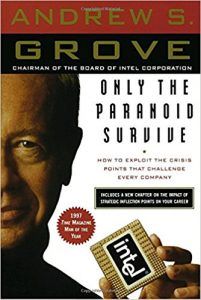
Only The Paranoid Survives

Book summary: Only The Paranoid Survives by Andrew Grove

The book talks about inflection points which if not handled carefully, are drastic (10x) enough to put a company out of business.

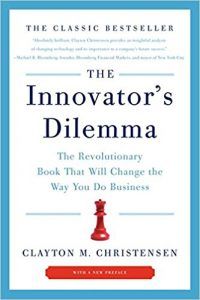
The Innovator's Dilemma

Book Summary: The Innovator's Dilemma

At some point, the incumbent’s product’s performance exceeds the demand of most customers. Then the “edge” that these performance metrics provided is lost, and the customers’ value proposition changes. They start valuing some other metrics, along which a disruptor’s product has better performance. The disruptor has an early mover’s advantage as well as leading to the demise of the incumbent.

How to create a mind

Book summary: How to create a mind by Ray Kurzweil

The book is an insightful journey into the contemporary understanding of the human brain and how scientists are trying to replicate it. Major takeaways from the book are listed below.

Advent of snap judgement and Internet's permanence

Advent of snap judgement and Internet's permanence

In 2013, we saw how internet activists’ snap judgments about the interpretation (or misinterpretation?) of jokes at pycon destroyed the professional career of two individuals (Source: A Dongle Joke That Spiraled Way Out Of Control). The internet activism first sympathized with Adria Richards and then decided to side with the developer, eventually, both of them (and SendGrid customers temporarily) took a major hit which could probably have been resolved offline and would have never become a part of permanent history. As if this was not enough, this year the same story has been repeated with Gurubaksh Chahal and his girlfriend Juliet Kakish. The claim goes that he allegedly hit his girlfriend 117 times and she allegedly suffered bruises and injuries, there is an alleged video of that proving the same (I haven’t been able to find one yet that does not imply it does not exist though) (Source: A Letter To The Board Members Of RadiumOne).

Thoughts on fixing tech recruiting

Thoughts on fixing tech recruiting

Enough articles have been written about engineering crunch in the valley while some solutions like increasing equity grants to engineers have been suggested, the bigger issue of the broken recruiting pipeline has not gained the attention it deserves. Its a job of recruiters to source potential candidates and most recruiters are compensated in form of a percentage (usually 20-30%) of the annual base salary of the hired individual.

Winners Take All - The 9 fundamental rules of high tech strategy

Winners Take All - 9 fundamental rules of high tech strategy

The book Winners take all is a collection of interesting insights into how companies in the high tech sector succeed and fail. The book was written in 2006 (pre-iPhone era) so it’s interesting to see how some companies mentioned by the author (notably, Apple and Google) succeeded and how some others (notably, Symantec and Nokia) are struggling.

Tech world's love for letter "X"

GoogleX Google neXus Apple Mac OS X Apple Xcode HTC One X Google Solve-for-X SpaceX IBM X-force Motorola Moto X Microsoft Xbox Comcast Xfinity Sony Xperia phone Dell XPS tablet X-treme tablet Motorola Xyboard tablet Nokia X No where, outside, of the tech world is the letter “X” gets such a prominence.