baby

What to buy during your baby's first year

Congratulations on becoming a parent! Here is a curated list of things worth buying during your child’s first year. Every baby is different, so your mileage may vary. The good news is that almost everything here comes in a wide range of prices to suit any budget. Many items can even be found cheaply, or for free, on platforms like nextdoor.com. Clothing For 0-6 months, buy only double-zipper full-body onesies. The second zipper makes diaper changes far easier. For 0-6 months, get your baby a good neck support pillow. It helps prevent the flat spots that might otherwise call for a head-shaping helmet later on. For 0-3 months, get a Swaddle Sack for sleep. It helps your baby feel cosy and sleep soundly through those first few months. Stop using it once the baby starts to roll over, which happens around 3-4 months of age. And remember: because of their small size, a baby needs one more layer than you do to stay warm at night. Learn to swaddle using a plain, breathable muslin cloth. Bathing Buy at least three towels per child. Each bath needs two, and one of them always ends up soaked through. Baby clothes are so lightweight that a regular lint brush won’t work on them. Use an adult toothbrush to scrub out stains, especially from diaper leaks. For 0-3 months, use a porous bathtub to reduce the risk of drowning, or simply hold the baby in your lap. Use a cloth drying hanger with a bucket to wash small loads quickly. Baby clothes are tiny and dry fast. Switch the whole family to a baby-friendly detergent. Diapers Cloth diapers are great. They fit well because you can adjust them to your child’s size. If you decide to go this route, practice how to fold a cloth diaper first. Disposable diapers run from size N (Newborn) to 1, 2, and up. Costco has the best prices. Use a diaper rash cream with 40% zinc oxide. Apply it proactively a few times a week, before any rashes appear. Most diaper rash creams contain fish oil. Boudreaux’s Butt Paste is one that doesn’t. Get a diaper pail. It does a great job of containing diaper odor, especially if you live in an apartment. Never use talcum powder. Babies should not inhale talcum. Use cornstarch powder as a safer alternative. Toys Before buying an electronic toys, consider getting an EMF meter. EMF and kidsRead this before buying an electronic toys A plain mat with raised borders is handy for changing diapers, playing with the baby, and even corralling toys. For a 2-month-old, the best toy is a play gym mat with buttons to kick and hanging objects to reach for. The specifics don’t matter, as the mats are all much the same. For a 6-month-old who can lift their head but can’t yet crawl, the best toy is a water mat. Once your baby can hold their head up, start doing baby sit-ups. For 6-9 months, once your baby is crawling but not yet walking, climbing blocks are one of the best toys. From 9-12 months, once your baby starts crawling, get spinners. Babies love watching them spin. Buy plenty: keep some in the car, some at home, and some for travel. If your child can stand, you can even coax them into walking. Place two spinners on a table just far enough apart that reaching the second one takes a single step. Too close, and there’s no reason to move. More than a step apart, and they’ll simply drop back to crawling. From 9 months onward, consider a walker — opinions differ here, and some parents think it’s a bad idea. I feel it gives the child a fresh view of the world. Once your child starts to walk, get a touch lamp — it’s a fun toy for them to play with. Food & medicine Baby formula — I believe A2 milk, being closer to breast milk, is superior to typical A1 milk. So my recommendation is to go with an A2-based formula. For safety reasons, I would not buy infant formula on online marketplaces. A2 Platinum uses DHA sourced from tuna. Serenity Kids Grass-Fed A2 Whole Milk Toddler Formula contains egg. Kendamil Organic Whole Milk Infant Formula Powder is the only good one — Safeway, Target, and sometimes Walmart carry it. Use vented bottles for feeding; they reduce how much air the baby swallows. The more air a baby gulps down, the more likely they are to burp. And because their digestive tract is small, that can lead to vomiting, which risks choking. Once your child weighs at least 5 kg, you can give Motrin (ibuprofen), according to this dosage chart. It’s especially useful around the time of vaccinations. Outdoors & Travel Chicco makes a good car seat. Another solid option is Graco. An infant car seat is safer, but you’ll need to replace it once your baby is 6-9 months old. Alternatively, a convertible car seat lasts until it expires or your child turns 12. For 0-6 months, a baby carrier beats a stroller. Babies love snuggling in one — get a lightweight model. The expensive carriers have too much padding, which reduces airflow for both parent and child. If both parents plan to use the carrier, buy one each so you’re not constantly readjusting the straps. Buy a lightweight compact stroller. It offers good ventilation and is easy to travel with on airplanes.
OCI card with Indian flag

Why and how to get OCI card for your child

What is OCI (Overseas Citizenship of India) OCI (Overseas Citizenship of India) is a lifelong visa granted to foreign citizens of Indian origin. If you are an Indian citizen with a child born in a jus soli country, like the USA or Mexico, your child is eligible for OCI card. OCI gives your child the right to visit, live, study, and work in India for an unlimited time. Why get an OCI Many parents thought that an Indian e-visa was enough for their child to visit India. And that was true, and then came COVID-19. ...

Book summary: How to Teach Your Baby to Read

The book presents interesting ideas around early-age reading developments for babies. Physical activity Crawling (with tummy on floor) and creeping (on just four limbs) are both important for the brain development of the baby. A playpen restricts a child’s ability to learn about the world. If small, it restricts crawling and creeping, which further restricts brain development, vision, and hand-eye coordination. The child appears hyperactive. In reality, he is using his five senses to learn about the world. Learning Toddlers have a natural desire to learn. They can learn repeated messages in commercials much more easily than Mickey Mouse cartoons, though. Between 9 months and 4 years, a baby has an unparalleled ability to absorb new information. Kids 12 months or younger are the best to start reading. Years one to five are best for learning as many languages as possible. Any misinformation that enters a child’s mind in the first six years is very difficult to remove later. Children as young as 2-3 years old are always reading and learning. You can only control what they read. And not whether they read. Reading vs spelling His vocabulary limits a man’s thinking sophistication. To form a more complicated thought, he has to develop the corresponding vocabulary. Reading like hearing is not a school subject. It is a brain function. Spelling, on the other hand, is a set of rules that is meant to be taught as a school subject. You can read but might not be able to spell a word. The reverse never happens. How to teach reading Only teach a child when both you and the child are in a good mood. A sleepy, hungry, or crying child will not learn. Better to go fast and risk boring the child. Do not start teaching the alphabet; it is too abstract for a child to learn. Start with words directly. Teach 5 sets of 5 words three times a day. Thus, each word is shown thrice for one second each time. Retire one word per set per day. So, 5 new words are added every day. Use large (5" tall, 3/4" thick to begin with) lowercase letters written in red color for teaching words. The immature visual pathway cannot focus on small letters. Slowly reduce the size as the visual pathways improve. The first set of words is a reference to the family and body parts. Once the child has learnt basic words, go to couplets, e.g., “red truck”, “orange juice”, and then to more concepts like “full cup”, “little chair”, etc. After couplets, go to three-word sentences, e.g., “daddy is sleeping”, “mommy is eating”, etc. Next step is the books. Good books to start after that (from the same publisher) are Enough, Inigo, enough and Nose is not toes. Reading aloud is a bad idea for children. It slows down reading, which slows down comprehension. The schools do it to test a child’s ability to read. Never test your child’s reading ability. Children hate testing.

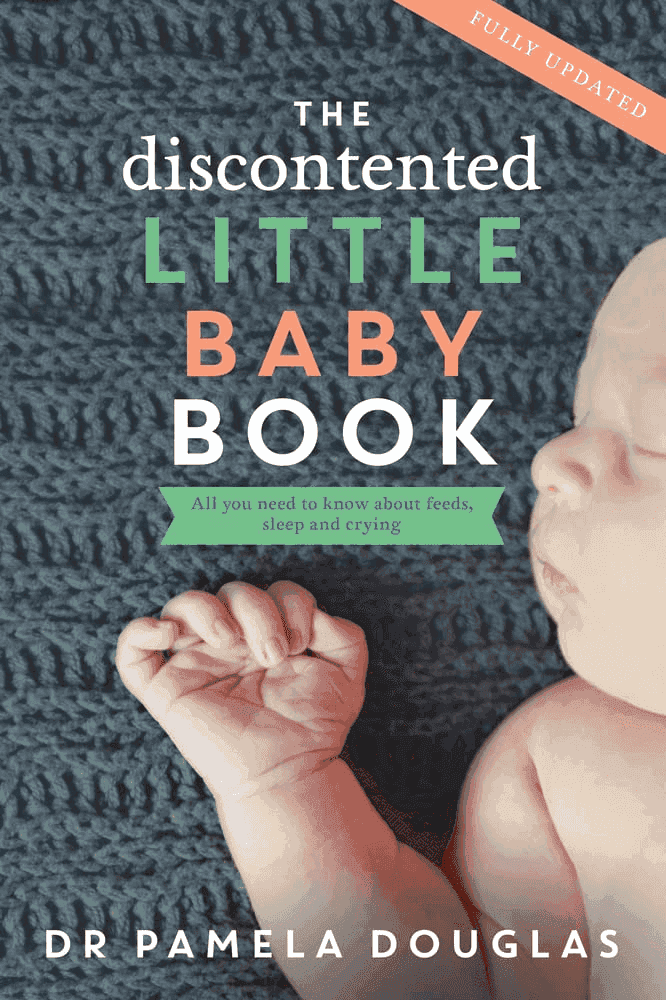
The Discontented Little Baby Book

Book Summary: The Discontented Little Baby Book

The book discusses various issues that make babies unhappy. It is a nice (though not great) read for first-time parents. A baby can naturally fall asleep. Hunger for food (milk) and hunger for sensations prevent that. Massages are good, but even carrying a baby in a body-hugging baby carrier is a form of massage. Steady walking with a baby in your arms is one of the best ways to calm down a distressed baby. Sleeping on the back has increased the incidence of head flattening. Due to sleeping on the back, the tummy time is even more important. Carrying a baby over your arm provides both tummy time and an amazing sensory experience for the baby. Beyond 10 hours a day, any more time spent with the baby has diminishing returns. Using a baby carrier while doing chores also exposes babies to the sensory experience of the house. White noise machines are not a good idea for babies during sleep. The best place for babies to fall asleep is near their parents. During the daytime and at night. Induced burping is a bad idea. It has little upside, and it interferes with sleep. If the baby fails to breastfeed properly in the first few days, it can create negative associations that are much harder to fix later on. A baby might cry a lot due to a lack of good gut bacteria. One can fix it by adding Lactobacillus reuteri to the baby’s diet. Overprescription of anti-acid medications leads to suppressed acid production, leading to allergies in the long run. Infacol is no better than a placebo in treating colic. In the initial days, the baby must gain ~200 grams per week (even 500 grams per week has been seen). Cue-based care creates a language of cues between the baby and the parents. For the first 16 weeks, babies make inconsolable cries as the amygdala (emotion center of the brain) is not fully developed. As the circuitry matures, the cries go down. Boys are usually less developmentally mature at birth than girls.

Book summary: The Natural Baby Sleep Solution

The natural baby sleep solution is an interesting book on the baby’s sleep patterns. BRAC, Basic Rest and Activity cycle of 90-120 minutes decides the sleep and wake times for everyone. This is especially useful for babies, who would be active for about 90 minutes and then need to sleep or slow down. Too much stimulation near sleep time can delay sleep and have adverse effects on cognitive development of the baby. Unlike adults, babies cannot easily fall asleep on their own till the age of 6 months. 6 to 8 months is the best time to sleep train a baby with either Feber method or cry-it-out method, which involves letting the baby cry for a certain amount of time before comforting them. The suprachiasmatic nucleus (SCN) regulates all body clocks, including the sleep-wake cycle and even hormonal cycles in women. NAPS plan - Note the time baby wakes up. Add 90 minutes to it. Play/feed with the baby. Soothe the baby at 90 minutes to make him fall asleep. Use red bulbs in the baby’s room to avoid stimulating them with blue light. If you feed the baby whenever he wakes up at night. Then the baby would get conditioned to food at that time. And then it would be impossible for the baby to sleep without food at that time. A 6+ month-old baby should be able to sleep through the night without food. They should get the calories they need during the day. A baby who is being put to sleep in the middle of the alertness cycle will not sleep regardless of how sleepy he might be. Some babies are early morning larks. Some are night owls. Usually, babies are larks till their teenage years. An 8-9-month-old baby might stand up in the crib. The novelty of standing would die down in a few weeks, though. The most important lesson is that the baby always functions according to 90-minutes cycle when awake. For the first 3-6 months, the baby needs a nap every 90 minutes. For the next 6-12 months, the baby needs a nap every 180 or 270 minutes. How long they sleep will vary from child to child, though.