Book summary: The Psychology of Money by Morgan Housel
The book is a great read about how money and wealth are acquired, preserved, and lost. And that too not because of the market but because of the individual’s psychology.
The book is a great read about how money and wealth are acquired, preserved, and lost. And that too not because of the market but because of the individual’s psychology.
Another great read in the Incerto series by Taleb. The core idea is that certain systems benefit from uncertainty. And our goal should be to make all systems antifragile, so that, they can benefit from uncertainty.
The book posits a unique viewpoint to understand randomness and unpredictability in the world around us. Rather than trying to predict the improbable black swans, it focuses more on how not to be adversely impacted by them.
The book is a good read on why some nations are rich today while others are poor.
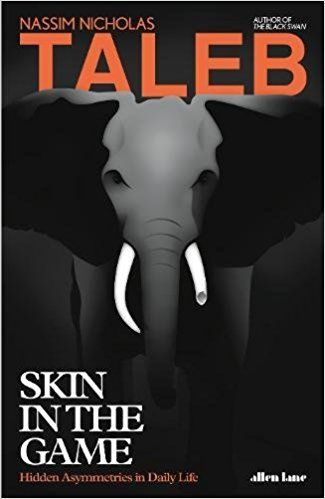
Skin in the game Skin in the game creates a diversity of beliefs and ideas, for example, restaurant businesses. Lack of it creates a monoculture, for example, journalism. Skin in the game comes with a conflict of interest. For example, a shareholder is more inclined to say positive things about the company, whose shares he holds. Even then, skin in the game is preferable over no skin in the game. A lack of skin in the game, usually, produces a monoculture of beliefs. Bureaucrats, with no skin the game, usually make the problems worse by deciding things from the top. Beware of “good” advice where you will get both the good and the adverse outcomes of that advice while the advice-giver will only get a good result. Metrics puts one’s skin in the wrong game. For example, a doctor who has to optimize for a five-year survival rate of a cancer patient might go for radiation therapy as opposed to laser surgery even though radiation therapy has worse 20-year survival rates. Pilots have more skin in the game than surgeons. If a plane has a 98% chance of surviving a flight, then all pilots would have been dead for now, while medical science can operate with a much lower survival rate since skin in the game is primarily of the patients and much lower of surgeons. An academic experiment where one is supposed to wager a bet and hypothetically believe in a specific scenario is devoid of real risk and hence devoid of skin in the game. Academia, when left unchecked, for the lack of skin in the game, evolves into a ritualistic self-referential publishing game.
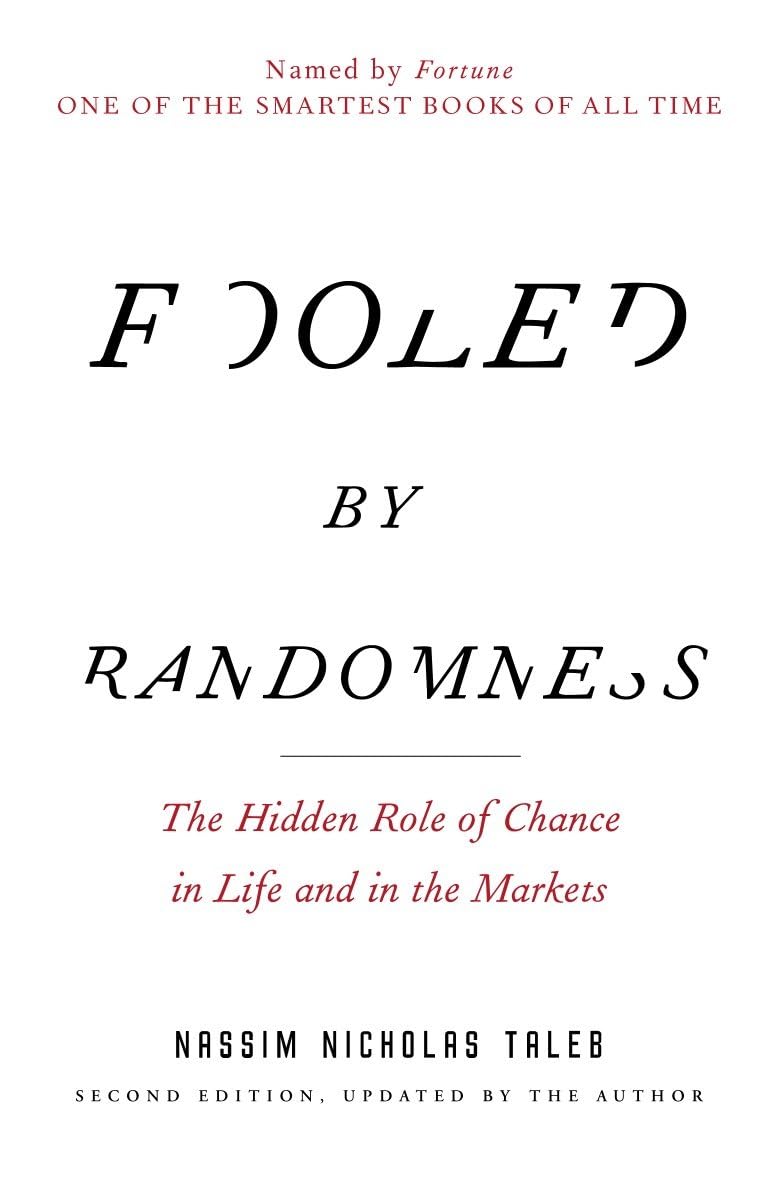
The book talks about randomness, associated maths, and the psychological biases which interfere with a more stochastic approach to thinking about life.
The common belief is that in the case of perfect competition (“commoditized goods”), buyers will always buy the lowest priced item, and this will dwindle down profits to practically nothing, and that’s why it’s called red ocean in the first place. While this is true in general, there is at least one notable exception to it. Consider the example of toothpaste, in the US, a toothpaste is ~1-2$ a piece. Are buyers really going to buy a white Colgate for 10¢ lower price over a red Colgate? Most would just stick to whatever they are used to. And that’s where lies the real strategy if the good’s price is an tiny fraction of the budget, it might never get optimized on.
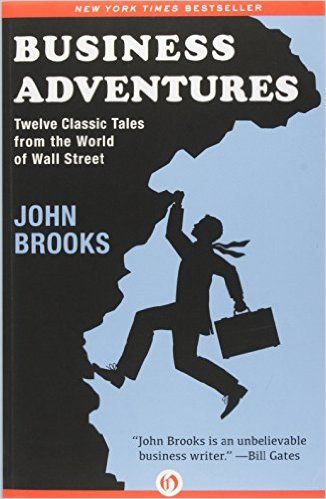
The book is rated as the best business book by both Bill Gates and Warren Buffett.
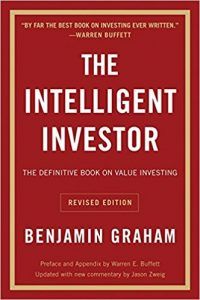
The Intelligent Investor by Benjamin Graham is considered the bible of investing.
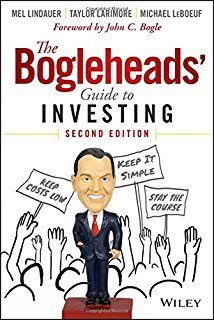
While the book is overall a good one, unfortunately, it contains a lot of generic financial advice which I decided not to include in the summary. Choose a sound financial lifestyle Borrowers borrow money from the future in the form of credit loans till the lifestyle collapses, consumers consume money paycheck to paycheck, keepers focus on accumulating wealth over time. The focus on net worth mentality over paycheck mentality actively works in keepers favor.