Book Summary: So good they can't ignore you by Cal Newport
The book is an excellent collection of rules which the author discovered while finishing his Ph.D. and transitioning into a full-time faculty position.
The book is an excellent collection of rules which the author discovered while finishing his Ph.D. and transitioning into a full-time faculty position.
At some point, the incumbent’s product’s performance exceeds the demand of most customers. Then the “edge” that these performance metrics provided is lost, and the customers’ value proposition changes. They start valuing some other metrics, along which a disruptor’s product has better performance. The disruptor has an early mover’s advantage as well as leading to the demise of the incumbent.
The book emphasizes heavily life education, glorifies college dropouts, and questions college education except for specialized fields like law and medicine.
The book is an insightful journey into the contemporary understanding of the human brain and how scientists are trying to replicate it. Major takeaways from the book are listed below.
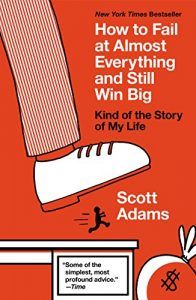
The book is a humorous compilation of pragmatic lessons which Scott Adams learned while navigating his professional career.

The Art of War is considered one of the classic books on military strategy. Due to the recent resurgence of China as an economic superpower, the book has garnered interest from non-Chinese who are curious to know more about its strategy.
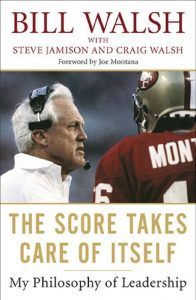
The book is written by Bill Walsh - San Francisco’s 49ers Football team coach who transformed the worst-performing team of its era into the best-performing team. The book talks about the changes he brought in as well as his philosophy of leadership which is generic enough to apply outside of American Football. He is also known as the creator of the West Coast Offense.

The book is the narration of the author’s life as a prisoner in the Nazi concentration camp.

The book Winners take all is a collection of interesting insights into how companies in the high tech sector succeed and fail. The book was written in 2006 (pre-iPhone era) so it’s interesting to see how some companies mentioned by the author (notably, Apple and Google) succeeded and how some others (notably, Symantec and Nokia) are struggling.
The book contains pragmatic advice for dealing with the clutter and noise of the everyday world, which disguises itself in the form of work. The book has two parts. First one focuses on the principles and the second one provides concrete practical advice based on the same.